Mandolin
Danger, Will Robinson!
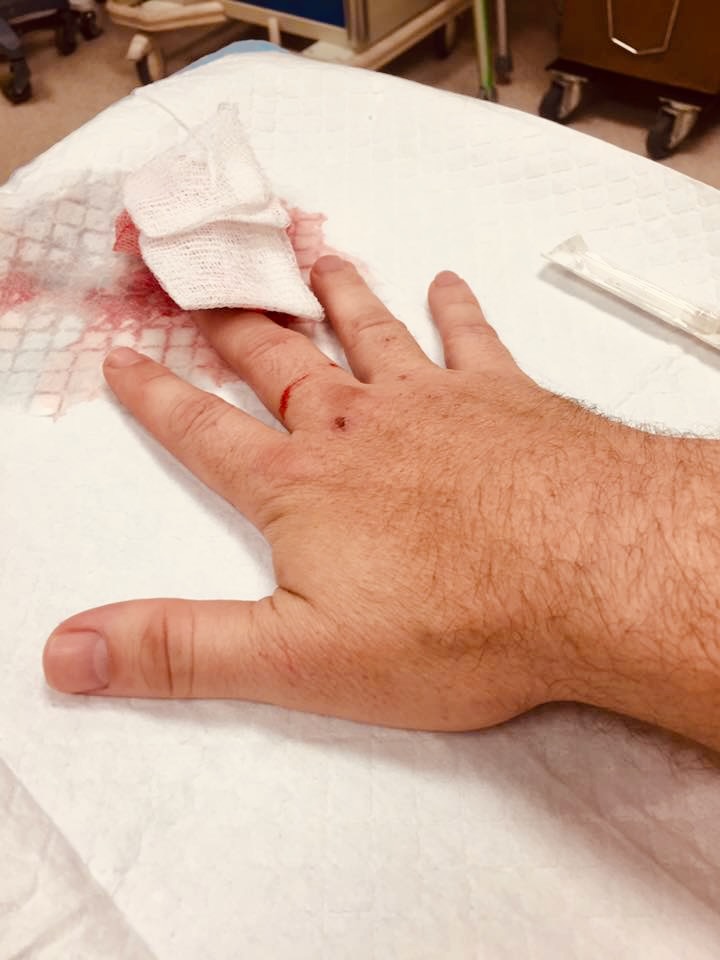
The first time I used a mandolin, I’d already heard all the warnings and read the instructions. Instructors had told me to be careful. But I was smarter than that. It was just an onion. I didn’t need the guard. I’d stop before—
I sliced the tip of my finger off.
The thing is, a mandolin is so sharp you don't even realize what's happened at first. Then you notice the blood in your sliced onions. Then you look at your hand. Then you're off to the emergency room.
So the moral of the story is:
Respect the mandolin. Always use the guard.
If it’s so dangerous, why use a mandolin?
Because nothing else does what it does as well.
A mandolin gives you perfectly even, paper-thin slices in seconds. Potatoes for gratin, onions for sandwiches, cucumbers for salads—everything cooks and eats more evenly when the slices are consistent. You can get close with a knife, but not this fast and not this uniform.
It’s also one of the few tools that meaningfully changes the texture of a dish. Thin enough slices stop being “pieces” and start behaving like a layer—melting into sauces, crisping evenly, or folding into a bite without resistance.
So yes, it’s dangerous. But it’s also incredibly useful.
The trade-off is simple:
1) you get speed and precision—
2) in exchange for needing to pay attention every single time you use it.
Choosing a mandolin
To get started, I recommend something like the basic Oxo plastic mandolin.
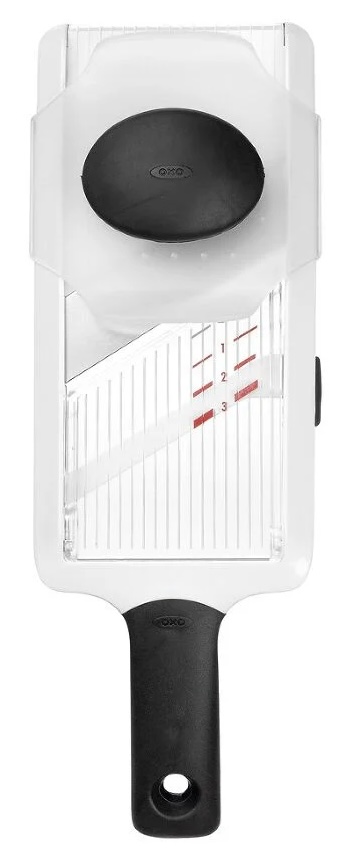
It’s cheap, small, relatively safe, and has a few blade settings for different slice thicknesses. It’s a good way to see if you’ll actually use a mandolin without committing to something more aggressive.
If you find yourself using it regularly and want something faster and more precise, the next step up is a Benriner-style slicer. In my case, I’m using the popular Japanese Benriner Super Slicer.
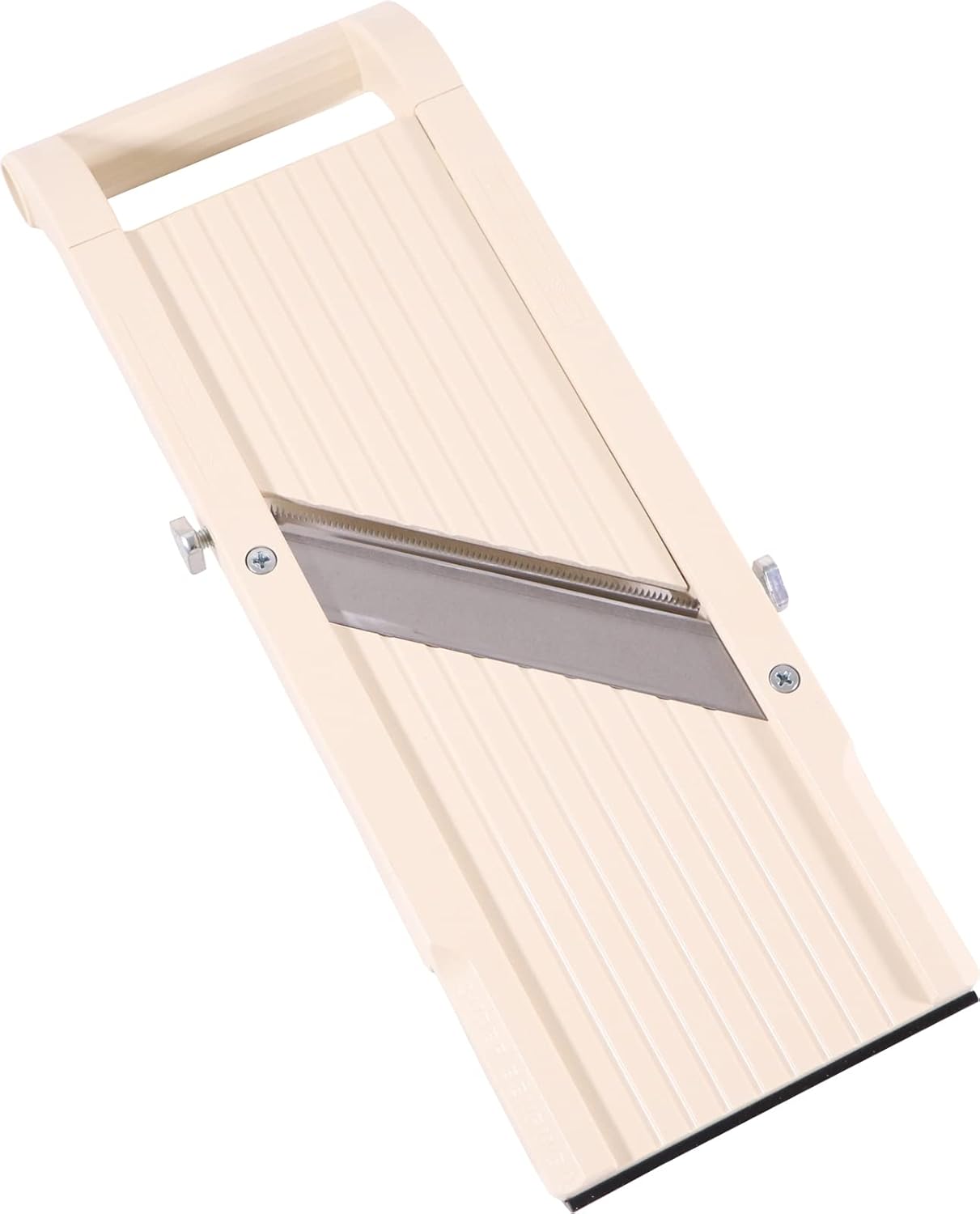
These are what a lot of serious cooks and competition chefs use. They’re simple, compact, extremely sharp, and very good at producing clean, consistent slices. They also often come with additional blades for cuts like julienne.
They are also exactly as unforgiving as they look. If you read the section above, you already know what that means.
I do not recommend jumping to a professional restaurant-style mandolin.
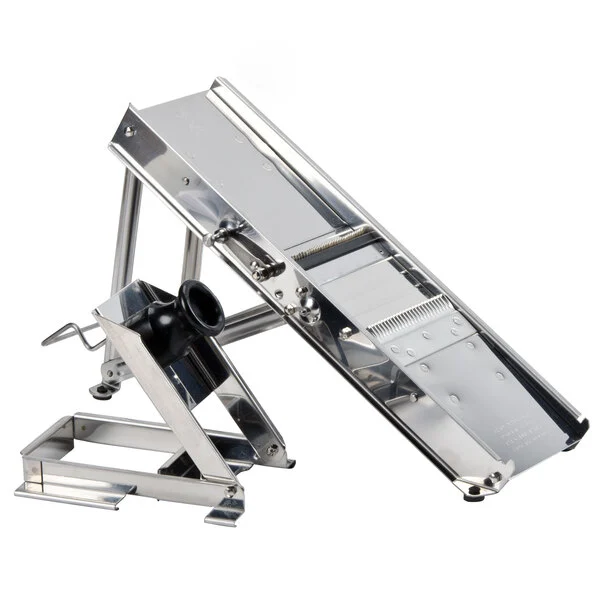
They’re large, awkward to set up, and significantly more dangerous. They’re designed for high-volume prep, not a home kitchen.
Start simple.
Upgrade if you need it.
And whatever you do—use the guard.