Bacon Fat
Bacon fat (rendered bacon grease) is one of the most flavorful traditional cooking fats. When bacon is cooked, the fat melts and can be saved for later use.
Many cooks consider it a small culinary luxury because it adds a deep smoky richness that other fats cannot easily replicate.
Uses
Bacon fat has a smoke point of 370°F / 188°C and works especially well for:
- Frying eggs
- Sautéing vegetables such as green beans, cabbage, or Brussels sprouts
- Cooking cauliflower
- Starting soups, beans, or stews
- Adding a small amount of smoky flavor to sauces or gravies
Because the flavor is strong, it is often used in combination with a neutral fat rather than as the only cooking fat.
Collecting
When cooking bacon for other purposes, it is easy to collect the rendered fat for later use.
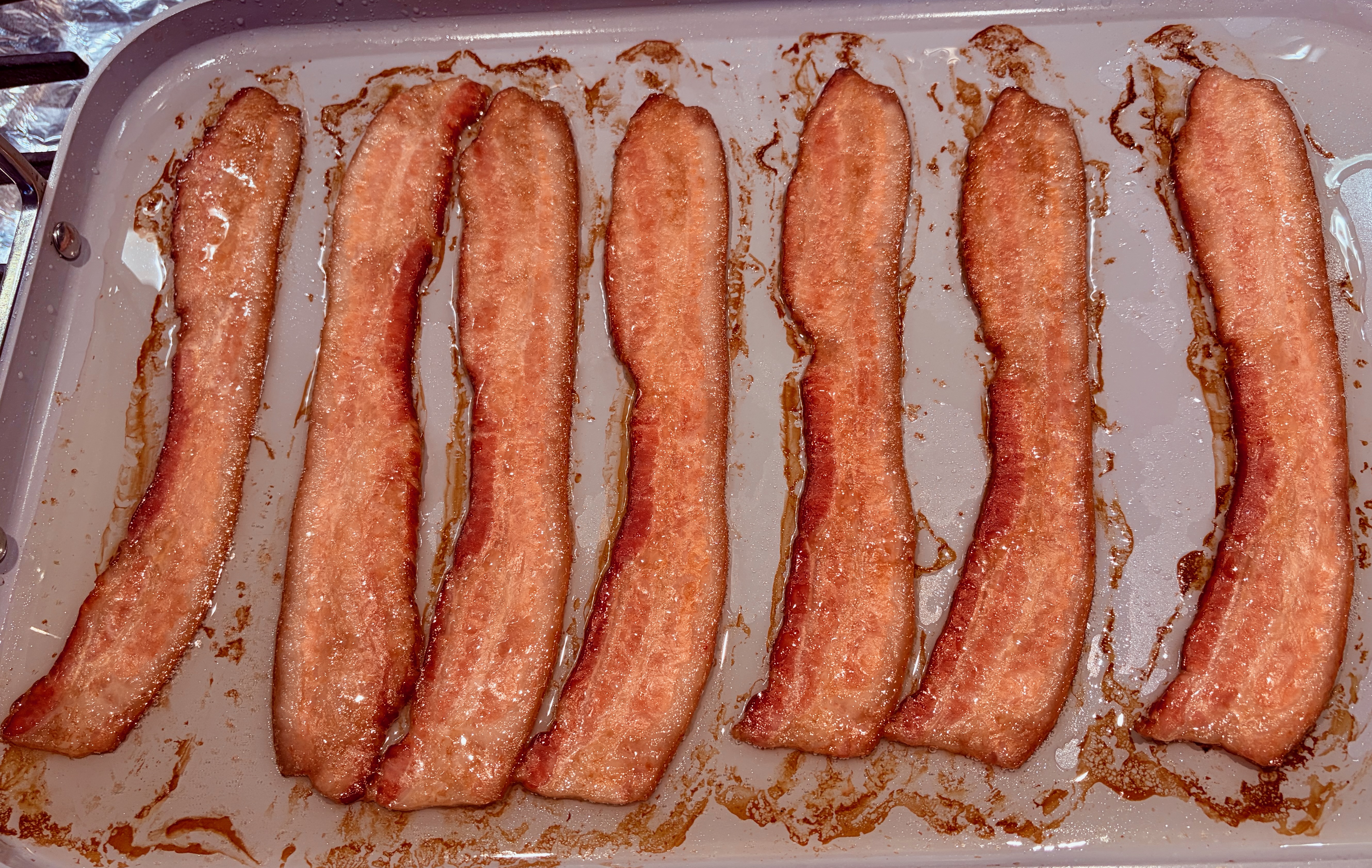
Skillet method
- Cook the bacon slowly over medium‑low heat so the fat renders gradually rather than burning.
- As fat accumulates in the pan, carefully pour it through a small strainer into a heat‑safe container or jar.
- Continue cooking the bacon until crisp.
Rendering bacon more slowly produces cleaner, better‑tasting fat because fewer burnt particles end up in it.
Oven bacon method
Cooking bacon on a sheet pan in the oven is one of the easiest ways to collect fat.
- Line a sheet pan with foil or parchment.
- Arrange bacon strips in a single layer.
- Bake at 375–400°F / 190–205°C until done.
- Carefully pour the accumulated fat from the pan through a strainer into a jar.
This method often produces a larger amount of clear fat because the bacon cooks evenly and the fat pools in one place.
Straining
Even if the fat looks clean, it is best to strain it:
- Fine mesh strainer
- Paper towel
- Coffee filter
Removing small browned bits helps the fat keep much longer and prevents burnt flavors.
Allow the fat to cool slightly before transferring it to storage containers.
Storage
Bacon fat is surprisingly stable when properly strained.
To store:
- Pour the warm (not hot) fat through a fine strainer or paper filter to remove solids.
-
Transfer to a clean glass jar or sealed container.
-
Refrigerator: keeps for several months.
- Freezer: can last a year or more.
Some traditional kitchens keep bacon fat at room temperature, but refrigeration is safer for long‑term storage because any remaining food particles can eventually spoil.