Caramelized Onions
The struggle is real. For decades home cooks have read cookbook instructions like "caramelize the onions for 5 minutes" and been mystified when they just got soggy onions. It was all a big lie. The cookbook authors were paid off by Big Onion. Now you know.
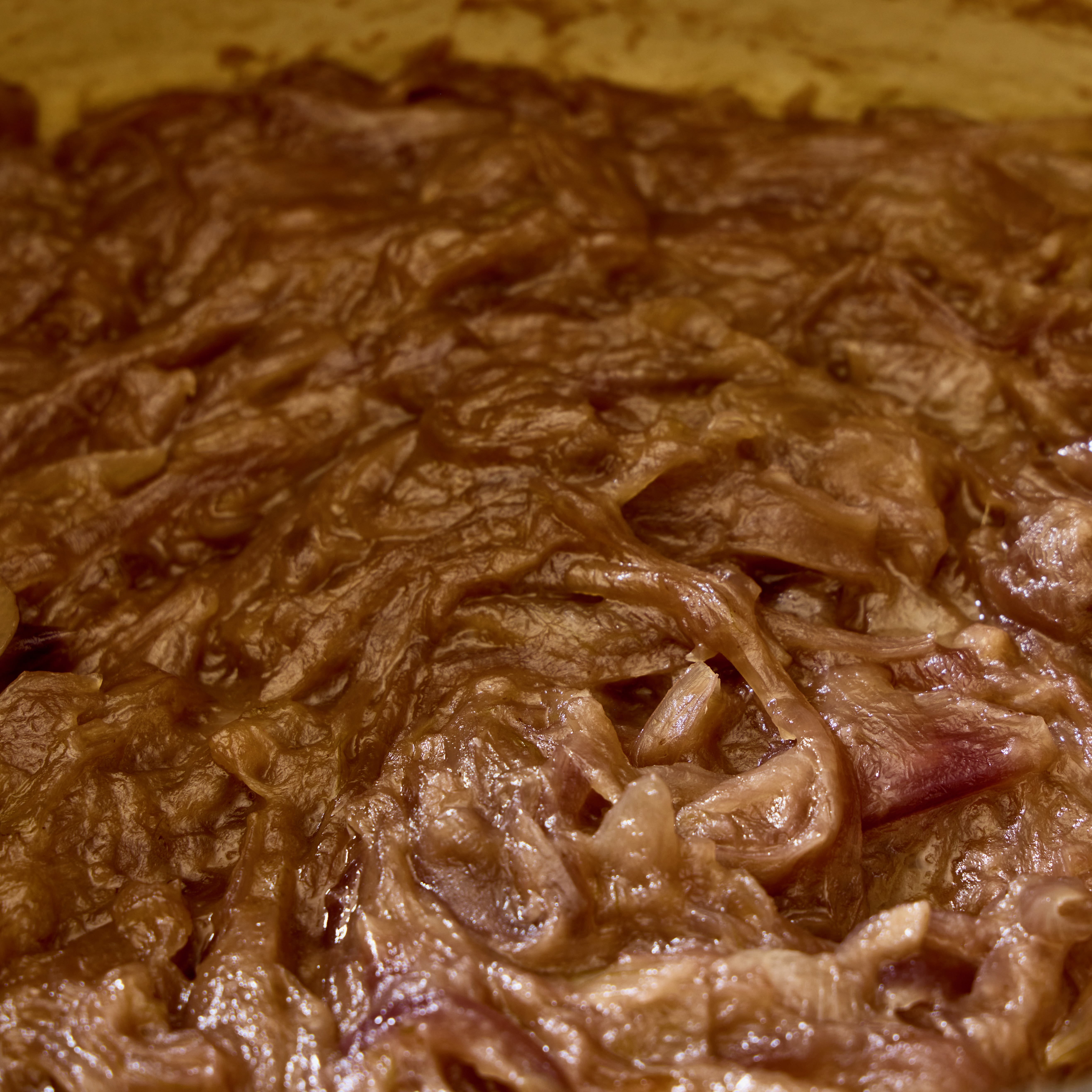
Caramelizing onions is a long process that slowly develops amazing taste and texture. Here I provide a process that removes the hour of you constantly stirring onions and replaces it with low-and-slow cooking in a Dutch oven.
Caramelized onions freeze wonderfully, so you can put in all the work once on a big batch, freeze it, and benefit for months.
Ingredients
- Onions, any amount. Yellow or red onions preferred.
- Butter, oil, or a combination
- Water, for deglazing
Method
- Peel the onions, halve them from root to tip, and slice lengthwise, following the natural grain.
- Melt a generous amount of fat in the Dutch oven over medium heat. Add the onions and a pinch of salt. Cook, stirring frequently, until the onions begin to soften and settle into the bottom of the pot, about 5 minutes.
- Cover the pot tightly, reduce the heat to the lowest possible setting, and cook for about 2 hours, stirring roughly every 45 minutes. During this time, the onions will release liquid, steam will condense on the lid and drip back down, and the onions will become completely tender and collapsed.
- Remove the lid and increase the heat to medium-high. Cook, stirring frequently, until the liquid evaporates and a brown coating (fond) begins to form on the bottom of the pot, about 10–15 minutes.
- Add 2 tablespoons of water and scrape the browned coating from the bottom of the pot. Stir to distribute the onions evenly and continue cooking until the water evaporates and browning resumes, about 5 minutes.
- Repeat the water-and-scrape process several times until the onions reach a deep brown color and a jammy consistency. Continue until the desired depth of caramelization is achieved.
- Taste and adjust salt if needed. Remove from heat.
Storage
- Cool completely.
- Portion into small containers or silicone molds like Souper Cubes (1–2 tablespoons per portion is ideal).
- Freeze solid, then store airtight.
Reheat gently in a pan or add directly to soups, sauces, purées, eggs, or sautés.