Reducing
Some of my best dishes have come about because I just kept reducing until the magic happened.
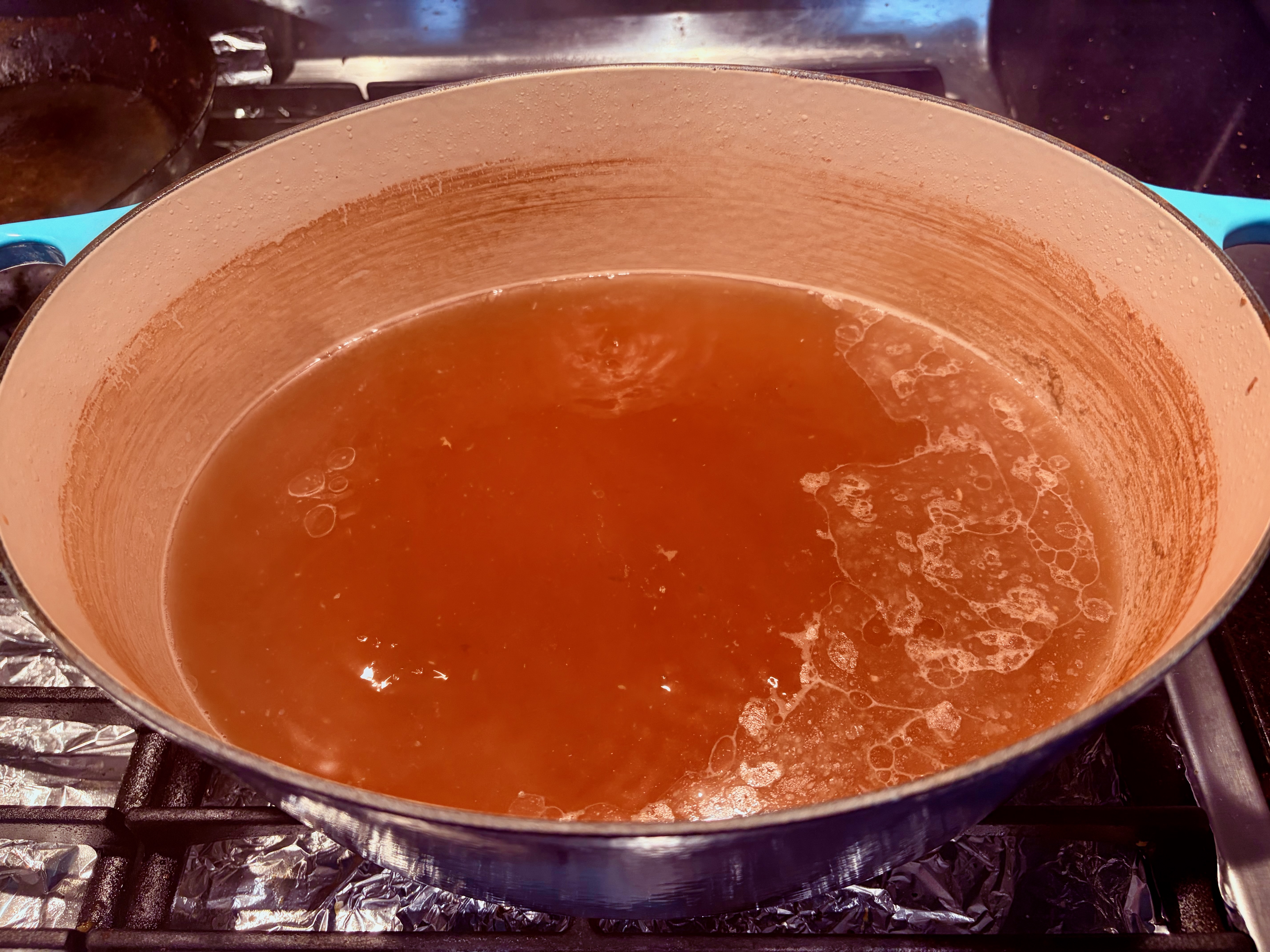
The first time I tried making stock it started out very disappointing. It just tasted like water with some residual fat mixed in. So I got stubborn and just kept reducing it. And after a long time, something shocking happened: suddenly it crossed a threshold where it became very tasty and I couldn't get enough of it.
What reducing does
Reducing concentrates flavor by evaporating water from a liquid. Stocks, sauces, and braising liquids often start relatively dilute. As water evaporates, the dissolved proteins, gelatin, salts, and aromatic compounds become more concentrated, producing a richer and more intense flavor.
Reduction also improves texture. As liquids reduce, gelatin and other dissolved compounds thicken the liquid naturally, creating body without needing flour or other thickeners.
When to reduce
Reduction is useful whenever a liquid tastes thin, weak, or watery. Common situations include:
- Finishing a stock or broth
- Concentrating a braising liquid into a sauce
- Intensifying wine or vinegar in a pan sauce
- Tightening a sauce that is too thin
A good rule of thumb: if the flavor is right but too weak, reduce.
How to reduce
- Place the liquid in a wide pan or saucepan. A larger surface area speeds evaporation.
- Bring the liquid to a steady simmer rather than a violent boil.
- Leave the pan uncovered so steam can escape.
- Stir occasionally and scrape the sides if residue builds up.
- Taste periodically as the liquid reduces.
The goal is to stop reducing when the flavor becomes rich and balanced. If you reduce too far, the liquid may become overly salty or intense.
If you’ll be refrigerating or freezing the liquid for later use, it’s often better to stop short of reducing it all the way. When you reheat it later, you can finish the reduction and bring it to its final flavor and consistency.
Visual and texture cues
As reduction progresses you will often notice:
- Bubbles becoming thicker and slower
- The liquid coating the back of a spoon
- A deeper color and aroma
When the liquid lightly coats a spoon or forms a thin glaze on the pan surface, it is usually near its ideal point.
Common mistake
The most common mistake is stopping too early. Liquids often taste mediocre until they cross a certain threshold of concentration. If the flavor is still thin, keep reducing and tasting.
Another common mistake
Reducing after adding salt. Because reduction concentrates everything in the liquid, salt levels will also increase. It is often better to reduce first and adjust salt at the end.